


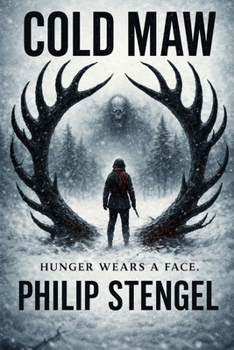
Cold Maw

Select Format
Select Condition 
Book Overview
The storm is not your enemy. Hunger is. And it has learned to walk.
Soldotna, Alaska. Late January. A blizzard eats the Kenai. Power lines snap, radios die, and a research outpost goes quiet after one transmission: screaming, then static.
Captain Amos Redding leads a four-person team into whiteout: Dr. Evelyn Harrow the medic, Lena Kivaluk the local guide who knows the old stories, Tommy Vega the overconfident tech, and Dr. Nathan Cole the biologist who trusts data over instinct.
Forty miles later they find the outpost half buried. The door is open. The cold is already inside.
The first body is ice.
The second looks the same.
The third is split open, ribs pried wide, marrow gone.
On the table: TEETH IN THE WIND scratched into steel.
The generator fails. The storm closes. Something moves beyond the walls. Prints lengthen each hour. The wind carries voices that sound familiar. Lena has a name for it. Her grandfather called it the Maw: hunger that wears the dead. Nathan calls it infection. Evelyn calls it myth. Tommy calls it impossible. By morning, someone will call it by name.
Cold Maw is relentless survival horror where folklore collides with biology. Think the paranoia of The Thing, the cold realism of The Terror, and the psychological unraveling of 28 Days Later. Every rule of survival is tested: heat, rations, teamwork, and sanity.
Inside the book
Rescue to siege: radios dead, storm howling, a door that will not hold forever.
Field medicine under fire: triage, case notes, choices made by lantern light.
Inherited warning: stories never meant to be proven true.
A team fraying to I: hunger, fear, and trust collapsing by degrees.
An evolving predator: not legend reborn, an appetite learning to think.
What sets it apart
Folklore reframed through scientific realism.
Characters driven by survival, not trope.
Consequences that matter. Every decision scars.
Dread through silence, logistics, and human failure, not jump scares.
For readers who love The Thing, The Terror, The Hunted, and 28 Days Later.
Content warning: intense survival themes, starvation, cannibalism, psychological breakdown, restrained body horror. Adult readers.
When hunger takes form, reason is the first casualty.
When it learns your voice, trust is the second.
When the fire dies, there is no third.
Customer Reviews
ThriftBooks® and the ThriftBooks® logo are registered trademarks of Thrift Books Global, LLC
