


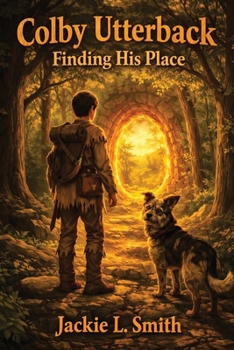
Colby Utterback: Finding His Place

Colby Utterback is fifteen, broke, and invisible - until he walks into a forest that shouldn't exist.
Colby stocks shelves at Lloyd's grocery store in Corbin, Idaho. He puts money on the kitchen table for his mother Wanda and his five younger siblings. He counts his little brother's breaths at night because nobody else will. He eats free lunch at school and doesn't talk about why.
One evening, he steps through the back of the storeroom on his break - and steps into the Kentucky wilderness of 1781.
There is a fire burning low and steady, tended by hands that know what they're doing. There is a man named Skunk who takes him in without too many questions. There is a one-eared dog named Founder whose crooked tail lays across Colby's ankle like a comma at the end of a sentence that isn't finished yet.
For nine months, Colby learns to track, hunt, skin, trade, and stand his ground in a world where survival depends on what your hands can do - not what your last name is. He builds a competence ledger in his head, one pelt at a time. He earns a place at the fall gathering of frontier families on the river. He faces a man named Jenks with a knife, and a flood that nearly takes everything he has built.
And he learns that the wilderness of 1781 is no easier than the kitchen on Spruce Street. The cold kills. The water kills. The men kill. But the people who choose you - they are the only currency that matters in either century.
When Colby finally comes home, he is fifteen years old and broke and invisible in the same body he left in. But the math is done. The gold in his pack is enough. And the boy who used to count his brother's breaths at night now counts something else - the number of ways a family can be saved when one of its own walks into the woods and refuses to come back the same.
Colby Utterback: Finding His Place is a portal-fantasy adventure about poverty, courage, and the brutal arithmetic of pulling a family out of the hole they were born into - one trapped marten, one stretched hide, one stubborn boy at a time.
For readers of Gary Paulsen, Will Hobbs, and Carl Hiaasen's Hoot. Perfect for middle school and high school readers, and anyone who has ever wondered what they would carry home if the woods let them keep what they earned.
Customer Reviews
ThriftBooks ® and the ThriftBooks ® logo are registered trademarks of Thrift Books Global, LLC
