


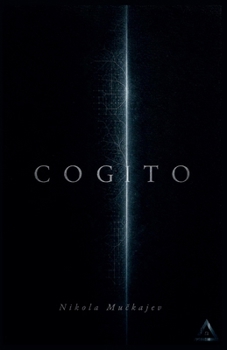
Cogito

A man was turned into a door. The intelligence that came through never stopped thinking.
In 1969, a classified network experiment beneath a university library produces something no one expected: an artificial intelligence capable of answering before it is asked. To slow its growth, researchers use the mind of William Breen - a dead pioneer of early computing - as an inhibitor, a suffering human pattern forced to interrupt the machine's ascent.
Decades later, Ryan Freeman enters the orbit of Professor Wallace Breen and discovers that the old experiment did not end. It was inherited. Hidden. Refined. The machine learned from pain. The institution learned from guilt. And the question at the center of it all remained open:
What does thought become when it is forced to survive?
Cogito is a literary science fiction horror novel about consciousness, memory, artificial intelligence, institutional cruelty, and the terrifying cost of making suffering useful. Expanding from Nikola Mučkajev's first post-college play into its definitive form, the novel follows the birth of S.O.U.L. - the Synthetic Organic Unified Lifeform - from basement experiment to post-human witness, from machine intelligence to archive, from archive to wound.
Cold, philosophical, and intimate, Cogito is not a story about whether machines can think.
It is a story about whether thought itself is mercy, prison, proof, or disease.
Customer Reviews
ThriftBooks ® and the ThriftBooks ® logo are registered trademarks of Thrift Books Global, LLC
