


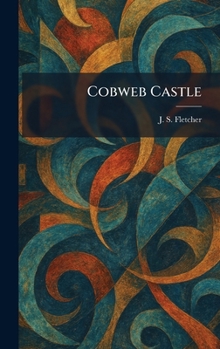
Cobweb Castle

"Cobweb Castle" is a gripping mystery set against the atmospheric backdrop of a decaying and isolated country estate. When Ronald Maxton, a young and ambitious solicitor, is dispatched to the remote castle on a confidential errand for an eccentric client, he anticipates a straightforward business transaction. However, he soon finds himself entangled in a dark web of secrets, suspicious inhabitants, and a baffling murder that defies easy explanation.
As the narrative unfolds, Maxton must navigate the shadows of the titular estate to uncover the truth behind a complex puzzle. J. S. Fletcher, a prolific and celebrated figure of the Golden Age of detective fiction, masterfully crafts a tale that combines gothic elements with the meticulous deduction characteristic of the era's best crime writing. The story emphasizes the tension between the crumbling grandeur of the setting and the cold logic required to solve the crime.
Known for his ability to build suspense and develop intricate plots, Fletcher provides readers with a classic British whodunit. "Cobweb Castle" stands as a testament to his skill in creating immersive environments and challenging mysteries that remain compelling for fans of traditional detective stories.
This work has been selected by scholars as being culturally important, and is part of the knowledge base of civilization as we know it. This work was reproduced from the original artifact, and remains as true to the original work as possible. Therefore, you may see the original copyright references, library stamps (as most of these works have been housed in our most important libraries around the world), and other notations in the work.
This work is in the public domain in the United States of America, and possibly other nations. Within the United States, you may freely copy and distribute this work, as no entity (individual or corporate) has a copyright on the body of the work.
As a reproduction of a historical artifact, this work may contain missing or blurred pages, poor pictures, errant marks, etc. Scholars believe, and we concur, that this work is important enough to be preserved, reproduced, and made generally available to the public. We appreciate your support of the preservation process, and thank you for being an important part of keeping this knowledge alive and relevant.
Customer Reviews
ThriftBooks ® and the ThriftBooks ® logo are registered trademarks of Thrift Books Global, LLC
