


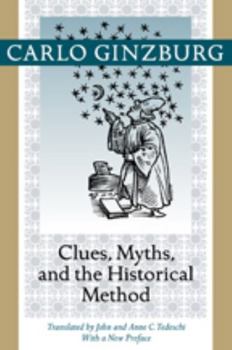
Clues, Myths, and the Historical Method


Select Format
Select Condition 
Book Overview
Carlo Ginzburg considers how we assign historical context to events.
More than twenty years after Clues, Myths, and the Historical Method was first published in English, this extraordinary collection remains a classic. The book brings together essays about Renaissance witchcraft, National Socialism, sixteenth-century Italian painting, Freud's wolf-man, and other topics. In the influential centerpiece of the volume Carlo Ginzburg places historical knowledge in a long tradition of cognitive practices and shows how a research strategy based on reading clues and traces embedded in the historical record reveals otherwise hidden information. Acknowledging his debt to art history, psychoanalysis, comparative religion, and anthropology, Ginzburg challenges us to retrieve cultural and social dimensions beyond disciplinary boundaries.
In his new preface, Ginzburg reflects on how easily we miss the context in which we read, write, and live. Only hindsight allows some understanding. He examines his own path in research during the 1970s and its relationship to the times, especially the political scenes of Italy and Germany. Was he influenced by the environment, he asks himself, and if so, how? Ginzburg uses his own experience to examine the elusive and constantly evolving nature of history and historical research.
Related Subjects
Europe Historical Study & Educational Resources Historiography History Ireland Italy ReferenceCustomer Reviews
History vs. Science
ThriftBooks® and the ThriftBooks® logo are registered trademarks of Thrift Books Global, LLC
