


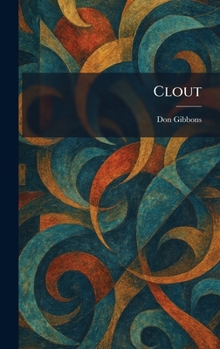
Clout

"Clout" is a compelling exploration of power, influence, and the complex web of social and political maneuvering in the early 20th century. Written by Don Gibbons, this narrative delves into the lives of individuals who strive to command authority in a world where personal leverage is the ultimate currency. The work serves as a sharp study of ambition, examining how the pursuit of status can drive human behavior and reshape the landscape of a community.
Set against a backdrop of shifting loyalties and high-stakes decision-making, the story follows characters as they navigate the treacherous waters of public life and private interest. Gibbons captures the tension between moral integrity and the seductive pull of "clout," providing a nuanced look at the mechanisms of leadership and the often-unseen hands that guide the course of events. With its focus on character-driven drama and thematic depth, "Clout" offers a timeless reflection on the nature of authority and the sacrifices made in the name of success. This work stands as a significant literary observation of the American spirit during a period of rapid social change, making it an essential read for those fascinated by the dynamics of influence and the psychology of power.
This work has been selected by scholars as being culturally important, and is part of the knowledge base of civilization as we know it. This work was reproduced from the original artifact, and remains as true to the original work as possible. Therefore, you may see the original copyright references, library stamps (as most of these works have been housed in our most important libraries around the world), and other notations in the work.
This work is in the public domain in the United States of America, and possibly other nations. Within the United States, you may freely copy and distribute this work, as no entity (individual or corporate) has a copyright on the body of the work.
As a reproduction of a historical artifact, this work may contain missing or blurred pages, poor pictures, errant marks, etc. Scholars believe, and we concur, that this work is important enough to be preserved, reproduced, and made generally available to the public. We appreciate your support of the preservation process, and thank you for being an important part of keeping this knowledge alive and relevant.
Customer Reviews
ThriftBooks ® and the ThriftBooks ® logo are registered trademarks of Thrift Books Global, LLC
