


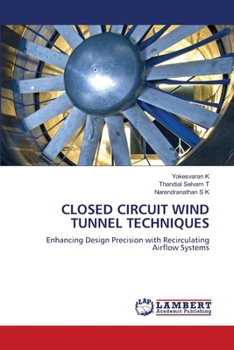
Closed Circuit Wind Tunnel Techniques
No Customer Reviews

Wind tunnel techniques involve experimental methods to study the aerodynamic characteristics of objects by simulating airflow in a controlled environment. A wind tunnel is a specialised facility where air is directed at varying speeds over scaled models or actual components of vehicles, buildings, or other structures. These techniques analyse lift, drag, pressure distribution, flow visualisation, and aerodynamic stability. Various types of tunnels, such as subsonic, transoceanic, supersonic, and hyper sonic, cater to different speed regimes. Tools like smoke trails, pressure sensors, and force balances provide data for refining designs, optimising performance, and validating computational models in aerospace, automotive, and architectural applications.
Format:Paperback
Language:English
ISBN:6208419883
ISBN13:9786208419882
Release Date:December 2024
Publisher:LAP Lambert Academic Publishing
Length:88 Pages
Weight:0.28 lbs.
Dimensions:0.2" x 6.0" x 9.0"
Customer Reviews
0 rating
Copyright © 2026 Thriftbooks.com Terms of Use
| Privacy Policy | Do Not
Sell/Share My Personal Information | Cookie Policy | Cookie Preferences | Accessibility Statement
ThriftBooks® and the ThriftBooks® logo are registered trademarks of Thrift Books Global, LLC
ThriftBooks® and the ThriftBooks® logo are registered trademarks of Thrift Books Global, LLC
