


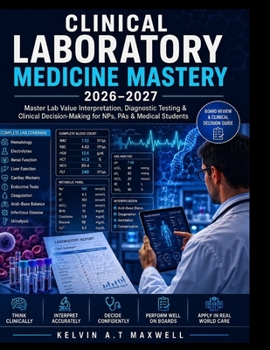
Clinical Laboratory Medicine Mastery 2026-2027: Master Lab Value Interpretation, Diagnostic Testing & Clinical Decision-Making for NPs, PAs & Medical

Lab Value Interpretation, Diagnostic Reasoning & Board Review for NPs, PAs & Medical Students
Connect Laboratory Results to Clinical Decisions with ConfidenceIn clinical practice, laboratory results are only valuable when they lead to accurate decisions. Yet many learners can identify lab values without truly understanding what they mean in real patients.
Clinical Laboratory Medicine Mastery 2026-2027 bridges that gap by transforming raw laboratory data into clear, structured clinical reasoning. This book is designed to help you move beyond memorization and develop the ability to interpret laboratory findings quickly, accurately, and confidently in both exams and real-world practice.
Designed for Real Clinical Decision Making
This guide focuses on practical interpretation rather than overwhelming theory. It teaches you how to recognize patterns, connect abnormal values to underlying pathology, and integrate laboratory data into patient management decisions.
Whether you are on clinical rotations, preparing for board exams, or managing patients in a busy hospital setting, this book helps you think like a clinician rather than a memorizer.
Inside This Book, You Will Master: CBC interpretation and hematology patterns in common clinical conditionsElectrolyte disorders and rapid bedside correction principlesABG interpretation with acid-base imbalance analysisLiver function tests and hepatobiliary disease patternsRenal function tests and kidney disease assessmentInfection and inflammation markers used in clinical decision makingDiagnostic reasoning frameworks used in board exams and hospital practice
Built for Exams and Clinical Practice
This book is structured for fast learning and long-term retention. It strengthens your ability to recognize clinically important patterns and apply them under pressure during exams, rounds, and patient care situations.
It is especially useful for:
NP (Nurse Practitioner) students and graduatesPA (Physician Assistant) students and cliniciansMedical students preparing for exams and rotationsResidents in Internal Medicine, Emergency Medicine, and Family MedicineNew clinicians building confidence in lab interpretationWhy This Book Is Different
Most laboratory references list values without teaching how to think through them. This book focuses on clinical reasoning, helping you understand not just what is abnormal, but why it is abnormal and what to do next.
The result is faster decision making, improved diagnostic confidence, and stronger performance in both academic and clinical environments.
Build Confidence in Clinical Interpretation
By the end of this book, you will be able to interpret laboratory results systematically and translate them into clear clinical actions. The goal is simple: reduce uncertainty and improve confidence when faced with real patient data.
Master laboratory interpretation. Strengthen clinical reasoning. Make better decisions under pressure.
Customer Reviews
ThriftBooks ® and the ThriftBooks ® logo are registered trademarks of Thrift Books Global, LLC
