


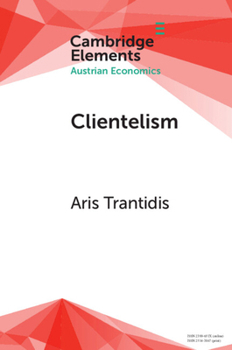
Clientelism
No Customer Reviews

This Element examines clientelism and its impact on democratic institutions and markets, emphasizing that, alongside electoral competition, politics hosts two additional arenas: one where political actors seek campaign resources and active supporters, and another where socioeconomic actors pursue access to state-distributed resources. Clientelism emerges from reciprocal exchanges between these actors. Political parties use clientelism to incentivize collective action and organize campaigns. Playing this 'clientelist game', no party can reduce clientelistic practices without risking electoral defeat or internal fragmentation. Clientelism weakens the provision of public goods and skews policymaking to benefit clients over general welfare. Eventually, it generates an economic 'tragedy of the commons', as state resources are overexploited and the economy suffers, while formal institutions often fail to constrain it. Even in advanced democracies like the United States, political competition is not only electoral, targeting voters, but structurally clientelist. This title is also available as Open Access on Cambridge Core.
Format:Paperback
Language:English
ISBN:1009707663
ISBN13:9781009707664
Release Date:December 2025
Publisher:Cambridge University Press
Length:94 Pages
Weight:0.30 lbs.
Dimensions:0.2" x 6.0" x 9.0"
Customer Reviews
0 rating
Copyright © 2026 Thriftbooks.com
Terms of Use | Privacy Policy | Do Not Sell/Share My Personal Information | Cookie Notice | Cookie Preferences | Accessibility Statement
ThriftBooks ® and the ThriftBooks ® logo are registered trademarks of Thrift Books Global, LLC
ThriftBooks ® and the ThriftBooks ® logo are registered trademarks of Thrift Books Global, LLC
