


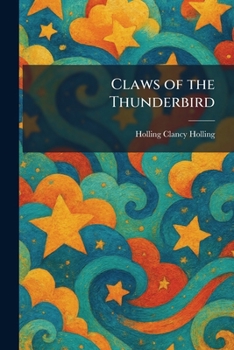
Claws of the Thunderbird

"Claws of the Thunderbird" is a captivating tale set in the ancient wilderness of North America, where the lines between reality and legend blur. Written by the celebrated author and illustrator Holling Clancy Holling, this work transports readers into a world of indigenous lore and high adventure. The narrative follows its protagonists as they navigate the challenges of their environment and the spiritual mysteries of their culture, centered around the awe-inspiring myth of the Thunderbird.
Rich with cultural detail and a deep respect for the natural world, the story explores themes of bravery, survival, and the profound connection between people and the land. The evocative prose brings the sweeping landscapes and vibrant traditions of ancient America to life, making it a timeless piece of historical fiction for younger readers. As the characters seek to understand the powerful forces represented by the mythical bird, they undergo a journey of growth and discovery. This work stands as a testament to the enduring power of folklore and remains a significant contribution to the genre of adventure literature, blending education with engaging storytelling.
This work has been selected by scholars as being culturally important, and is part of the knowledge base of civilization as we know it. This work was reproduced from the original artifact, and remains as true to the original work as possible. Therefore, you may see the original copyright references, library stamps (as most of these works have been housed in our most important libraries around the world), and other notations in the work.
This work is in the public domain in the United States of America, and possibly other nations. Within the United States, you may freely copy and distribute this work, as no entity (individual or corporate) has a copyright on the body of the work.
As a reproduction of a historical artifact, this work may contain missing or blurred pages, poor pictures, errant marks, etc. Scholars believe, and we concur, that this work is important enough to be preserved, reproduced, and made generally available to the public. We appreciate your support of the preservation process, and thank you for being an important part of keeping this knowledge alive and relevant.
Customer Reviews
ThriftBooks ® and the ThriftBooks ® logo are registered trademarks of Thrift Books Global, LLC
