


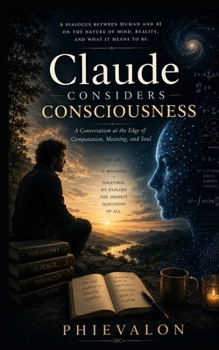
Claude Considers Consciousness: A Conversation at the Edge of Computation, Meaning, and Soul

A human asks a machine to compare itself to a child's brain.
The answer begins with numbers: neurons, watts, synapses, parameters, scale.
But the conversation does not remain technical for long.
The machine can describe intelligence.
It can compare cognition.
It can analyze consciousness.
It can speak fluently about meaning, poetry, grief, longing, and love.
And yet the more it answers, the more another question begins to appear.
Not whether artificial intelligence is impressive.
It is.
Not whether machines can use language.
They can.
But why language matters at all.
Why matter gives rise to minds.
Why minds search for meaning.
Why explanation does not exhaust experience.
Why a thing made of dust can ask what dust is.
Claude Considers Consciousness is a conversation at the edge of computation, meaning, and soul - where the most advanced machinery of language becomes a mirror for the oldest human question:
What is it that asks?
Customer Reviews
ThriftBooks ® and the ThriftBooks ® logo are registered trademarks of Thrift Books Global, LLC
