


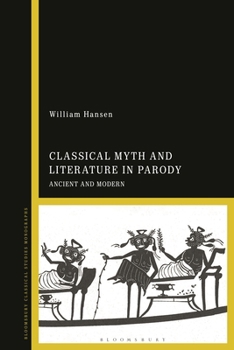
Classical Myth and Literature in Parody: Ancient and Modern
No Customer Reviews

This book examines the evolution of classical parody, from its origins in ancient Greece and Rome to its resurgence in modern times. The book explores two key periods: the first from the sixth century BCE to the second century CE, and the second beginning in the 17th century, continuing today. In antiquity, writers like Aristophanes and Lucian parodied their own culture, relying on audiences' deep knowledge of Greek and Roman texts. This "insider" parody faded with the rise of Christianity and changes in language.
The second era of classical parody emerged during the Renaissance, as classical texts were rediscovered and studied in schools. Writers like Charles Cotton in England created "outsider" parody, mocking ancient literature learned in the classroom. This book focuses on English-language works, including The Comic Latin Grammar and Victorian burlesque theatre, which drew on classical mythology and history. The book also addresses the social and educational changes that shaped classical parody, such as the invention of the printing press and the influence of Renaissance humanism. It is the first comprehensive study of anglophone classical parody, revealing how authors through the centuries have reimagined and distorted classical texts for humorous effect.Format:Hardcover
Language:English
ISBN:1350548030
ISBN13:9781350548039
Release Date:July 2026
Publisher:Bloomsbury Academic
Length:296 Pages
Weight:1.11 lbs.
Dimensions:1.1" x 6.1" x 9.2"
Customer Reviews
0 rating
Copyright © 2026 Thriftbooks.com
Terms of Use | Privacy Policy | Do Not Sell/Share My Personal Information | Cookie Policy | Cookie Preferences | Accessibility Statement
ThriftBooks ® and the ThriftBooks ® logo are registered trademarks of Thrift Books Global, LLC
ThriftBooks ® and the ThriftBooks ® logo are registered trademarks of Thrift Books Global, LLC
