


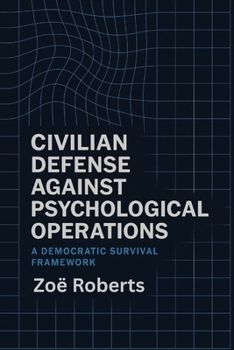
Civilian Defense Against Psychological Operations: A Democratic Survival Framework

Modern threats to democracy rarely arrive with tanks or coups. They arrive through fear, confusion, exhaustion, and the manipulation of perception. Psychological operations target civilians not by force, but by narrowing what people believe is possible, safe, or worth defending.
Civilian Defense Against Psychological Operations offers a nonviolent framework for recognizing and resisting these tactics before they harden into repression. Drawing on political theory, contemporary case studies, and historical patterns, the book explains how information warfare, intimidation, and narrative control weaken democratic capacity-and how civilians, institutions, and communities can counter them without escalating conflict.
This is not a guide to protest, partisan messaging, or insurgency. It is a practical framework for preserving legitimacy, protecting civic space, and maintaining moral clarity under pressure. Designed for students, educators, organizers, journalists, public servants, and engaged citizens, the book treats democratic defense as a shared civilian responsibility rather than a military function.
When power seeks control through fear, resilience begins with understanding.
Customer Reviews
ThriftBooks® and the ThriftBooks® logo are registered trademarks of Thrift Books Global, LLC
