


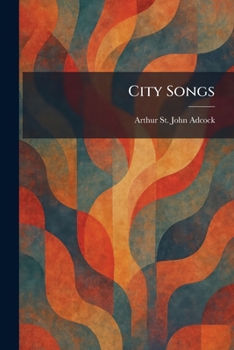
City Songs

"City Songs" is a poignant and evocative collection of verse that captures the multifaceted essence of urban life in the early 20th century. Written by Arthur St. John Adcock, a keen observer of London's bustling streets and hidden corners, the poems explore the diverse experiences of city dwellers-from the quiet struggles of the impoverished to the vibrant energy of the metropolis. Adcock's work is characterized by a deep empathy for the common individual and an uncanny ability to find beauty and significance in the mundane activities of daily life.
The collection serves as a lyrical map of London, blending social realism with a compassionate sensibility. Through these "City Songs," the reader is transported to an era of fog-laden streets, crowded markets, and the persistent rhythm of the city. Themes of loneliness, hope, and the resilience of the human spirit resonate throughout the volume, making it a significant contribution to the tradition of urban poetry. Adcock's mastery of form and his insightful perspective offer a timeless reflection on the complex relationship between humanity and the modern urban environment.
This work has been selected by scholars as being culturally important, and is part of the knowledge base of civilization as we know it. This work was reproduced from the original artifact, and remains as true to the original work as possible. Therefore, you may see the original copyright references, library stamps (as most of these works have been housed in our most important libraries around the world), and other notations in the work.
This work is in the public domain in the United States of America, and possibly other nations. Within the United States, you may freely copy and distribute this work, as no entity (individual or corporate) has a copyright on the body of the work.
As a reproduction of a historical artifact, this work may contain missing or blurred pages, poor pictures, errant marks, etc. Scholars believe, and we concur, that this work is important enough to be preserved, reproduced, and made generally available to the public. We appreciate your support of the preservation process, and thank you for being an important part of keeping this knowledge alive and relevant.
Related Subjects
PoetryCustomer Reviews
ThriftBooks ® and the ThriftBooks ® logo are registered trademarks of Thrift Books Global, LLC
