


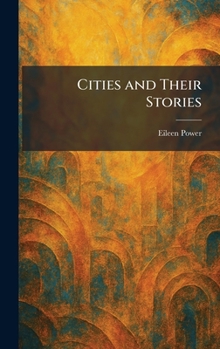
Cities and Their Stories

"Cities and Their Stories" is an engaging exploration of European history told through the life and development of its most iconic urban centers. Written by the renowned historian Eileen Power, this work examines how individual cities have shaped the course of Western civilization. From the ancient glory of Athens and Rome to the medieval splendor of Venice and Bruges, and the bustling streets of Paris and Vienna, each chapter serves as a historical biography of a specific location. By focusing on these pivotal hubs, Power provides readers with a vivid understanding of the social, political, and cultural shifts that defined different eras.
Through her masterful storytelling, Power connects significant historical figures and events to the physical spaces they occupied, making the past feel tangible and immediate. This book serves as both an introduction to the geography of Europe and a deep dive into the diverse traditions that have influenced the modern world. Ideal for those interested in urban history and the evolution of society, "Cities and Their Stories" remains a classic example of historical narrative that bridges the gap between scholarly insight and accessible, informative prose.
This work has been selected by scholars as being culturally important, and is part of the knowledge base of civilization as we know it. This work was reproduced from the original artifact, and remains as true to the original work as possible. Therefore, you may see the original copyright references, library stamps (as most of these works have been housed in our most important libraries around the world), and other notations in the work.
This work is in the public domain in the United States of America, and possibly other nations. Within the United States, you may freely copy and distribute this work, as no entity (individual or corporate) has a copyright on the body of the work.
As a reproduction of a historical artifact, this work may contain missing or blurred pages, poor pictures, errant marks, etc. Scholars believe, and we concur, that this work is important enough to be preserved, reproduced, and made generally available to the public. We appreciate your support of the preservation process, and thank you for being an important part of keeping this knowledge alive and relevant.
Customer Reviews
ThriftBooks® and the ThriftBooks® logo are registered trademarks of Thrift Books Global, LLC
