


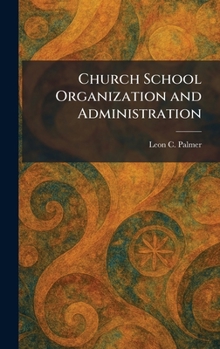
Church School Organization and Administration

"Church School Organization and Administration" is a comprehensive guide to the structural and operational foundations of religious education. This work provides a systematic approach to managing the various components of a successful church school, from personnel management to curriculum planning. The author emphasizes the importance of efficient organization in fostering spiritual growth and educational excellence within the church community.
The book explores practical strategies for leadership, the roles of different departments, and the methodologies for maintaining effective records and standards. It serves as an insightful look into the pedagogical and administrative standards of the early 20th century, offering principles on cooperation, oversight, and the integration of the school into the broader life of the church. "Church School Organization and Administration" is a valuable resource for historians of Christian education and church leaders interested in the evolution of Sunday school management. Through its detailed analysis, it remains a significant study on the professionalization of religious instruction and the organizational dynamics of faith-based institutions.
This work has been selected by scholars as being culturally important, and is part of the knowledge base of civilization as we know it. This work was reproduced from the original artifact, and remains as true to the original work as possible. Therefore, you may see the original copyright references, library stamps (as most of these works have been housed in our most important libraries around the world), and other notations in the work.
This work is in the public domain in the United States of America, and possibly other nations. Within the United States, you may freely copy and distribute this work, as no entity (individual or corporate) has a copyright on the body of the work.
As a reproduction of a historical artifact, this work may contain missing or blurred pages, poor pictures, errant marks, etc. Scholars believe, and we concur, that this work is important enough to be preserved, reproduced, and made generally available to the public. We appreciate your support of the preservation process, and thank you for being an important part of keeping this knowledge alive and relevant.
Customer Reviews
ThriftBooks ® and the ThriftBooks ® logo are registered trademarks of Thrift Books Global, LLC
