


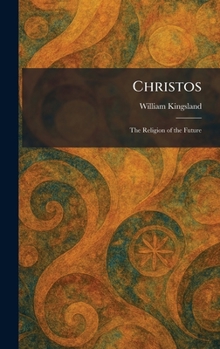
Christos: The Religion of the Future

Select Format
Select Condition 
Book Overview
"Christos: The Religion of the Future" is a profound exploration of spiritual evolution and the reconciliation of science, philosophy, and religion. Written by William Kingsland, a notable figure in the theosophical movement, the work examines the inner, mystical meaning of the Christian tradition and its place in the modern world. Kingsland argues that the traditional, dogmatic interpretations of Christianity are no longer sufficient for the developing human consciousness and proposes a transition toward a more universal, esoteric understanding of spiritual truths.
The book delves into the concept of the Christ-principle not merely as a historical figure, but as a living reality within every human being. By analyzing the core tenets of ancient wisdom and gnosticism, Kingsland seeks to bridge the gap between historical faith and contemporary thought. He suggests that the religion of the future will be one of direct experience and inner realization rather than external creed. "Christos: The Religion of the Future" serves as a visionary guide for seekers interested in the deeper dimensions of faith and the potential for a unified spiritual science that transcends sectarian boundaries.
This work has been selected by scholars as being culturally important, and is part of the knowledge base of civilization as we know it. This work was reproduced from the original artifact, and remains as true to the original work as possible. Therefore, you may see the original copyright references, library stamps (as most of these works have been housed in our most important libraries around the world), and other notations in the work.
This work is in the public domain in the United States of America, and possibly other nations. Within the United States, you may freely copy and distribute this work, as no entity (individual or corporate) has a copyright on the body of the work.
As a reproduction of a historical artifact, this work may contain missing or blurred pages, poor pictures, errant marks, etc. Scholars believe, and we concur, that this work is important enough to be preserved, reproduced, and made generally available to the public. We appreciate your support of the preservation process, and thank you for being an important part of keeping this knowledge alive and relevant.
Customer Reviews
ThriftBooks ® and the ThriftBooks ® logo are registered trademarks of Thrift Books Global, LLC
