


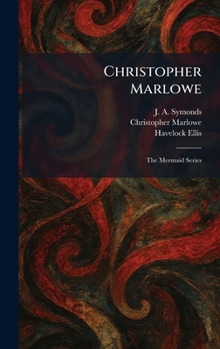
Christopher Marlowe: The Mermaid Series

"Christopher Marlowe: The Mermaid Series" presents a definitive collection of the dramatic masterpieces of one of the most influential figures in English literature. As a pioneer of Elizabethan tragedy and a master of blank verse, Marlowe transformed the English stage, paving the way for the greatness of William Shakespeare. This volume gathers his most significant works, including the haunting philosophical tragedy "Doctor Faustus," the epic conquest of "Tamburlaine the Great," the dark satire of "The Jew of Malta," and the historical drama "Edward II."
Through these plays, Marlowe explores themes of boundless ambition, the pursuit of forbidden knowledge, and the fragility of power. His characters are bold and complex, driven by desires that push the boundaries of the human experience. With an introduction by the esteemed literary critic J.A. Symonds and edited by Havelock Ellis, this collection provides essential historical and literary context for understanding Marlowe's turbulent life and his profound impact on the development of Western drama. "Christopher Marlowe: The Mermaid Series" remains an indispensable resource for students, scholars, and readers of classical Renaissance theater, showcasing the raw energy and poetic brilliance of the late 16th century.
This work has been selected by scholars as being culturally important, and is part of the knowledge base of civilization as we know it. This work was reproduced from the original artifact, and remains as true to the original work as possible. Therefore, you may see the original copyright references, library stamps (as most of these works have been housed in our most important libraries around the world), and other notations in the work.
This work is in the public domain in the United States of America, and possibly other nations. Within the United States, you may freely copy and distribute this work, as no entity (individual or corporate) has a copyright on the body of the work.
As a reproduction of a historical artifact, this work may contain missing or blurred pages, poor pictures, errant marks, etc. Scholars believe, and we concur, that this work is important enough to be preserved, reproduced, and made generally available to the public. We appreciate your support of the preservation process, and thank you for being an important part of keeping this knowledge alive and relevant.
Customer Reviews
ThriftBooks ® and the ThriftBooks ® logo are registered trademarks of Thrift Books Global, LLC
