


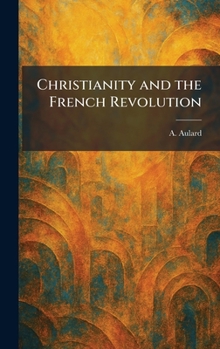
Christianity and the French Revolution

"Christianity and the French Revolution" is a definitive historical analysis exploring the complex and often volatile relationship between the Christian faith and the revolutionary movements of late eighteenth-century France. Written by the renowned historian A. Aulard, this work delves into the ideological shifts that saw the traditional authority of the Catholic Church challenged by the emerging principles of the Revolution. Aulard meticulously examines the transition from the Civil Constitution of the Clergy to the dechristianization movements and the eventual rise of state-sponsored cults like the Cult of Reason and the Cult of the Supreme Being.
This scholarly study provides a deep look at how the French Revolution sought to redefine the role of religion within the state, balancing themes of religious liberty with the political necessity of secularism. Through a rigorous examination of historical records, the author highlights the tensions between the revolutionary government and the papacy, as well as the impact of these conflicts on the daily lives of the French citizenry. "Christianity and the French Revolution" remains an essential text for understanding the foundations of modern secularism and the profound cultural transformations that shaped the course of European history.
This work has been selected by scholars as being culturally important, and is part of the knowledge base of civilization as we know it. This work was reproduced from the original artifact, and remains as true to the original work as possible. Therefore, you may see the original copyright references, library stamps (as most of these works have been housed in our most important libraries around the world), and other notations in the work.
This work is in the public domain in the United States of America, and possibly other nations. Within the United States, you may freely copy and distribute this work, as no entity (individual or corporate) has a copyright on the body of the work.
As a reproduction of a historical artifact, this work may contain missing or blurred pages, poor pictures, errant marks, etc. Scholars believe, and we concur, that this work is important enough to be preserved, reproduced, and made generally available to the public. We appreciate your support of the preservation process, and thank you for being an important part of keeping this knowledge alive and relevant.
Customer Reviews
ThriftBooks ® and the ThriftBooks ® logo are registered trademarks of Thrift Books Global, LLC
