


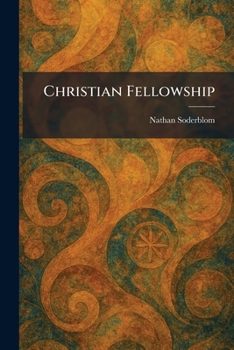
Christian Fellowship

"Christian Fellowship" is a profound exploration of the necessity for unity and cooperation among the various branches of the Christian faith. Written by Nathan S derblom, a pivotal figure in the modern ecumenical movement and a Nobel Peace Prize laureate, this work addresses the spiritual and practical imperatives for reconciliation in a world fractured by the aftermath of the Great War. S derblom argues that the essence of the Gospel calls for a visible and effective fellowship that transcends denominational boundaries, focusing on shared service and common goals rather than strictly rigid doctrinal uniformity.
The book delves into the historical foundations of the church and examines the contemporary challenges facing religious institutions in the early 20th century. By advocating for a collaborative approach to social and spiritual issues, the author emphasizes that "Christian Fellowship" is not merely an abstract theological concept but a lived reality that must manifest in social action and international peace-building. This work remains a cornerstone for understanding the origins of ecumenical dialogue and the enduring quest for a more unified Christian witness. Readers interested in church history, theology, and the intersection of faith and global ethics will find S derblom's insights both timeless and historically significant.
This work has been selected by scholars as being culturally important, and is part of the knowledge base of civilization as we know it. This work was reproduced from the original artifact, and remains as true to the original work as possible. Therefore, you may see the original copyright references, library stamps (as most of these works have been housed in our most important libraries around the world), and other notations in the work.
This work is in the public domain in the United States of America, and possibly other nations. Within the United States, you may freely copy and distribute this work, as no entity (individual or corporate) has a copyright on the body of the work.
As a reproduction of a historical artifact, this work may contain missing or blurred pages, poor pictures, errant marks, etc. Scholars believe, and we concur, that this work is important enough to be preserved, reproduced, and made generally available to the public. We appreciate your support of the preservation process, and thank you for being an important part of keeping this knowledge alive and relevant.
Customer Reviews
ThriftBooks ® and the ThriftBooks ® logo are registered trademarks of Thrift Books Global, LLC
