


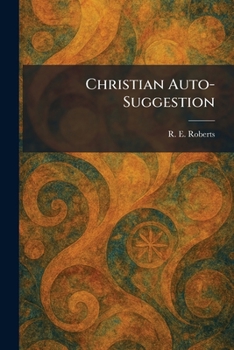
Christian Auto-Suggestion

"Christian Auto-Suggestion" explores the powerful synergy between psychological principles and traditional Christian faith. R. E. Roberts presents a practical guide for believers seeking to harness the power of auto-suggestion within a religious framework, arguing that the practice of self-suggestion, when aligned with Christian doctrine and prayer, can lead to profound spiritual growth, emotional stability, and physical well-being.
The text delves into the mechanisms of the subconscious mind, illustrating how positive, faith-based affirmations can replace negative thought patterns and deepen one's relationship with the Divine. By providing techniques for meditation and focused prayer, "Christian Auto-Suggestion" serves as a bridge between early 20th-century psychological movements and orthodox Christian living. It remains a compelling work for those interested in the evolution of pastoral psychology and the perennial quest for a holistic approach to mental and spiritual health. Readers will find a thoughtful examination of how disciplined thought and sincere belief can work together to transform the inner life.
This work has been selected by scholars as being culturally important, and is part of the knowledge base of civilization as we know it. This work was reproduced from the original artifact, and remains as true to the original work as possible. Therefore, you may see the original copyright references, library stamps (as most of these works have been housed in our most important libraries around the world), and other notations in the work.
This work is in the public domain in the United States of America, and possibly other nations. Within the United States, you may freely copy and distribute this work, as no entity (individual or corporate) has a copyright on the body of the work.
As a reproduction of a historical artifact, this work may contain missing or blurred pages, poor pictures, errant marks, etc. Scholars believe, and we concur, that this work is important enough to be preserved, reproduced, and made generally available to the public. We appreciate your support of the preservation process, and thank you for being an important part of keeping this knowledge alive and relevant.
Customer Reviews
ThriftBooks ® and the ThriftBooks ® logo are registered trademarks of Thrift Books Global, LLC
