


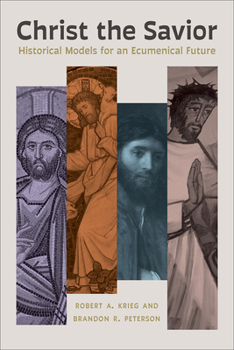
Christ the Savior: Historical Models for an Ecumenical Future

On the road to Emmaus, the risen Christ asked the two disciples, "Was it not necessary that the Messiah should suffer these things and then enter into his glory?" (Lk 24:26). In response, the Church in the West has formulated five classic answers, each of which, though limited, sheds light on God in Christ as saving Mystery.
These models of the Savior--as Representative, the Victim-Victor, the Selfless Penitent, God's Self-Gift of Agape, and as the Substitute-- have been interpreted from one perspective by Catholics and from a different perspective by Protestants. Yet, upon review, these differing views of the five traditional types of soteriology evince common ground. Dialogue between these perspectives "can enrich each side" (Pope Francis, Joy of the Gospel) as divergence shows points of convergence, to paraphrase The Joint Declaration on the Doctrine of Justification (JDDJ, 1999).
This much-needed volume introduces its readers to the church's five classic models of the Savior and to their interpretations by contemporary Catholic and Protestant theologians. In this endeavor, the book draws on Scripture, literature, art, phenomenology, and the moving stories of faith-filled resistance, conversion, and bravery seen from Christians like Mamie Till-Bradley, Dorothy Mae Stang, and Rosa Parks.
Customer Reviews
ThriftBooks ® and the ThriftBooks ® logo are registered trademarks of Thrift Books Global, LLC
