


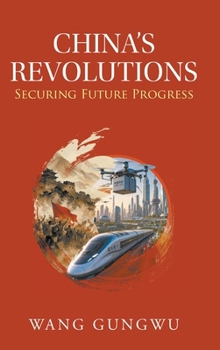
China's Revolutions: Securing Future Progress

How does a civilisation rise again after revolution, rupture and reinvention? China's modern transformation was shaped by two revolutions: the 1911 overthrow of dynastic rule and the 1949 remaking of state and society. In this wide-ranging historical reflection, Wang Gungwu traces how China struggled to reconcile its civilisational inheritance with the urgent demands of progress, sovereignty, industrialisation and global power.
Moving from the ancient idea of geming and the Mandate of Heaven, to republican nationalism, socialism with Chinese characteristics, maritime strategy and China's place in the Indo-Pacific, the book examines how Chinese leaders repeatedly sought renewal without severing continuity with the past. It explores the tension between heritage and modernity, land and sea, ideology and pragmatism, and China's relations with Southeast Asia and the wider world. At its heart is a searching account of how China's long history of falls and rises continues to shape its quest for future progress.
Related Subjects
HistoryCustomer Reviews
ThriftBooks ® and the ThriftBooks ® logo are registered trademarks of Thrift Books Global, LLC
