


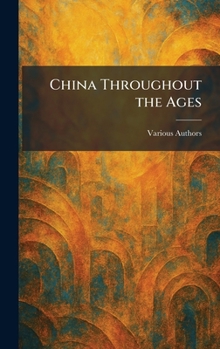
China Throughout the Ages

"China Throughout the Ages" offers a comprehensive exploration of the vast and intricate history of one of the world's oldest civilizations. This historical survey traces the development of China from its ancient origins through various dynastic transitions, examining the cultural, social, and political transformations that shaped the nation over millennia. The work provides readers with a detailed overview of China's enduring traditions, philosophical foundations, and its evolution into the early 20th century.
By synthesizing different historical perspectives, the collection captures the essence of China's long-standing heritage and its significant influence on global history. Whether discussing the rise and fall of powerful empires or the daily lives of its people, "China Throughout the Ages" serves as an essential resource for those seeking to understand the deep-rooted historical continuity and the dynamic shifts that have defined the Chinese experience. This volume is a testament to the resilience and complexity of a civilization that has maintained its distinct identity through centuries of change.
This work has been selected by scholars as being culturally important, and is part of the knowledge base of civilization as we know it. This work was reproduced from the original artifact, and remains as true to the original work as possible. Therefore, you may see the original copyright references, library stamps (as most of these works have been housed in our most important libraries around the world), and other notations in the work.
This work is in the public domain in the United States of America, and possibly other nations. Within the United States, you may freely copy and distribute this work, as no entity (individual or corporate) has a copyright on the body of the work.
As a reproduction of a historical artifact, this work may contain missing or blurred pages, poor pictures, errant marks, etc. Scholars believe, and we concur, that this work is important enough to be preserved, reproduced, and made generally available to the public. We appreciate your support of the preservation process, and thank you for being an important part of keeping this knowledge alive and relevant.
Related Subjects
HistoryCustomer Reviews
ThriftBooks ® and the ThriftBooks ® logo are registered trademarks of Thrift Books Global, LLC
