


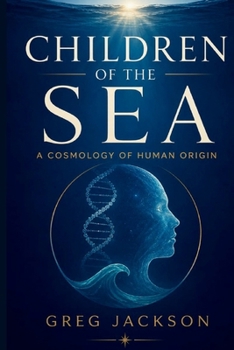
Children of the Sea

For decades, high school students have been taught biology, history, and environmental science as separate subjects - disconnected disciplines that rarely speak to one another. Children of the Sea offers something different: an integrated, interdisciplinary approach that shows students how the sciences, humanities, and even language all point toward the same profound truth about who we are and where we came from.
It Is Interdisciplinary by DesignChildren of the Sea does not fit neatly into a single subject box - and that is precisely its strength. It draws from: biology, chemistry, physics, astronomy, anthropology, history, linguistics, sociology/philosophy. For schools that are increasingly emphasizing STEM integration and cross-curricular learning, this book is a ready-made resource.
It Makes Science Personal and MeaningfulOne of the greatest challenges in science education is making abstract concepts feel relevant to students' lives. Children of the Sea solves this problem by grounding every scientific fact in the student's own body. It connects DNA, blood chemistry, pH balance, Melanin, the moon, and evolution. This book does not ask students to memorize facts about distant organisms. It invites them to look at their own hands, their own blood, their own cycles, and see the evidence written there.
It Tackles Racism and Misinformation Head-OnChildren of the Sea offers one of the most powerful antidotes to racism available in educational literature: a biological explanation for why human differences exist, grounded in climate and migration rather than hierarchy.
It Is Relevant to Current IssuesStudents today are growing up in a world facing urgent challenges: climate change, environmental degradation, rising inequality, and the erosion of trust in science. Children of the Sea speaks directly to these concerns. This is not a book that feels detached from the world. It is a book that helps students understand why the world is the way it is - and what we need to do to care for it.
It Supports Critical Thinking and Scientific LiteracyChildren of the Sea is not a textbook that asks students to memorize facts. It is a book that invites them to follow the evidence:
What does DNA tell us about our origins?
What does blood chemistry reveal about our ancestors?
What does language preserve about ancient knowledge?
How do we know what we claim to know?
Each chapter builds on the previous one, showing students how evidence accumulates across disciplines.
The book models:
Asking good questions
Following evidence where it leads
Questioning assumptions (including religious and cultural ones)
Integrating knowledge across fields
Reaching conclusions based on evidence, not ideology
This is not indoctrination. It is the opposite: an invitation to think independently and draw conclusions from the evidence.
It Fills a Gap in the CurriculumMost high school biology textbooks cover evolution, genetics, and human anatomy - but they rarely connect these topics to a larger narrative about human origins. It connects the dots in ways that traditional textbooks do not, providing a coherent, evidence-based narrative that ties together the facts students are already learning.
It Is Accessible and EngagingOne of the greatest barriers to science education is the dry, technical language of traditional textbooks. Children of the Sea is written in a voice that is:
Clear and direct - no unnecessary jargon. It engages the imagination.
Customer Reviews
ThriftBooks ® and the ThriftBooks ® logo are registered trademarks of Thrift Books Global, LLC
