


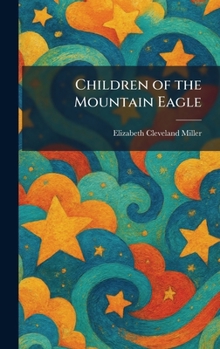
Children of the Mountain Eagle

"Children of the Mountain Eagle" is a vivid and evocative tale set high in the rugged Shkoder mountains of Albania. The story follows the lives of two children, Bor and Bari, as they navigate the challenges and beauty of their traditional highlander culture. Through their eyes, readers explore a world defined by ancient customs, loyalty, and the breathtaking natural landscape of the "Land of the Eagle."
Bor, a young girl, and Bari, a spirited boy, experience the daily rhythms of mountain life, from herding sheep and navigating steep trails to participating in the rich storytelling traditions of their people. Elizabeth Cleveland Miller captures the essence of a unique way of life, emphasizing values of courage, hospitality, and communal bonds. The narrative provides an authentic glimpse into the customs and folklore of early 20th-century Albania, making it a significant contribution to world children's literature.
Honored as a Newbery Honor book, "Children of the Mountain Eagle" remains a compelling journey into a distant land. It is a timeless story of childhood adventure that celebrates the resilience and spirit of those who call the high mountains home. This work is ideal for young readers interested in historical fiction and cultural exploration.
This work has been selected by scholars as being culturally important, and is part of the knowledge base of civilization as we know it. This work was reproduced from the original artifact, and remains as true to the original work as possible. Therefore, you may see the original copyright references, library stamps (as most of these works have been housed in our most important libraries around the world), and other notations in the work.
This work is in the public domain in the United States of America, and possibly other nations. Within the United States, you may freely copy and distribute this work, as no entity (individual or corporate) has a copyright on the body of the work.
As a reproduction of a historical artifact, this work may contain missing or blurred pages, poor pictures, errant marks, etc. Scholars believe, and we concur, that this work is important enough to be preserved, reproduced, and made generally available to the public. We appreciate your support of the preservation process, and thank you for being an important part of keeping this knowledge alive and relevant.
Customer Reviews
ThriftBooks ® and the ThriftBooks ® logo are registered trademarks of Thrift Books Global, LLC
