


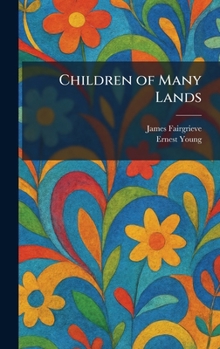
Children of Many Lands

"Children of Many Lands" is an engaging educational work designed to introduce young readers to the diverse cultures and environments of the globe. Through a series of narrative journeys, authors James Fairgrieve and Ernest Young explore the lives of children across various continents, illustrating how geographic conditions shape daily habits, clothing, housing, and social customs. By focusing on the relatable experiences of youth, the book provides a foundational understanding of human geography and the interconnectedness of the world's inhabitants.
The text emphasizes the importance of understanding the world beyond one's own borders, presenting information on different regions-from the icy reaches of the north to the tropical heat of the equator. The authors utilize a clear and accessible style that makes complex concepts of social science and anthropology digestible for a juvenile audience. As a significant historical example of early 20th-century pedagogy, "Children of Many Lands" remains a valuable resource for those interested in the history of education and the evolution of global cultural studies for children.
This work has been selected by scholars as being culturally important, and is part of the knowledge base of civilization as we know it. This work was reproduced from the original artifact, and remains as true to the original work as possible. Therefore, you may see the original copyright references, library stamps (as most of these works have been housed in our most important libraries around the world), and other notations in the work.
This work is in the public domain in the United States of America, and possibly other nations. Within the United States, you may freely copy and distribute this work, as no entity (individual or corporate) has a copyright on the body of the work.
As a reproduction of a historical artifact, this work may contain missing or blurred pages, poor pictures, errant marks, etc. Scholars believe, and we concur, that this work is important enough to be preserved, reproduced, and made generally available to the public. We appreciate your support of the preservation process, and thank you for being an important part of keeping this knowledge alive and relevant.
Customer Reviews
ThriftBooks ® and the ThriftBooks ® logo are registered trademarks of Thrift Books Global, LLC
