


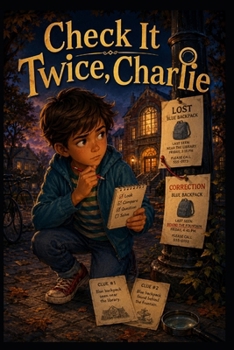
Check It Twice, Charlie
No Customer Reviews

Charlie is quick with his feet, quick with his jokes, and sometimes too quick with his words. When he hears a rumor about a treasure box in the school garden, he wants to tell everyone right away.
But one missing letter, one blurry photo, and one misunderstood sentence turn a small mistake into a big lesson. Charlie learns that smart thinkers do not stop at the first thing they hear or the first thing they see.
This story teaches young readers to slow down, compare clues, check the source, and ask: What else could this mean?
This story helps children ages 6-9 practice an important thinking habit: double-checking information before repeating it. Charlie learns that a claim can feel true because it is exciting, because a friend said it, or because one clue seems to support it.
Children at this age are ready to understand that evidence can be incomplete. A blurry picture, a hidden letter, or a sentence without context can lead to the wrong conclusion. The goal is not to make children distrust everything. The goal is to help them ask better questions before they believe.
A useful everyday activity is to play "What else could it mean?" Show a simple sentence, sign, or picture and ask children to think of two possible meanings. Then ask what extra clue would help them decide.
But one missing letter, one blurry photo, and one misunderstood sentence turn a small mistake into a big lesson. Charlie learns that smart thinkers do not stop at the first thing they hear or the first thing they see.
This story teaches young readers to slow down, compare clues, check the source, and ask: What else could this mean?
This story helps children ages 6-9 practice an important thinking habit: double-checking information before repeating it. Charlie learns that a claim can feel true because it is exciting, because a friend said it, or because one clue seems to support it.
Children at this age are ready to understand that evidence can be incomplete. A blurry picture, a hidden letter, or a sentence without context can lead to the wrong conclusion. The goal is not to make children distrust everything. The goal is to help them ask better questions before they believe.
A useful everyday activity is to play "What else could it mean?" Show a simple sentence, sign, or picture and ask children to think of two possible meanings. Then ask what extra clue would help them decide.
Format:Paperback
Language:English
ISBN:B0H7P5DPFR
ISBN13:9798185652145
Release Date:July 2026
Publisher:Independently Published
Length:26 Pages
Weight:0.10 lbs.
Dimensions:0.1" x 6.0" x 9.0"
Customer Reviews
0 rating
Copyright © 2026 Thriftbooks.com
Terms of Use | Privacy Policy | Do Not Sell/Share My Personal Information | Cookie Notice | Cookie Preferences | Accessibility Statement
ThriftBooks ® and the ThriftBooks ® logo are registered trademarks of Thrift Books Global, LLC
ThriftBooks ® and the ThriftBooks ® logo are registered trademarks of Thrift Books Global, LLC
