


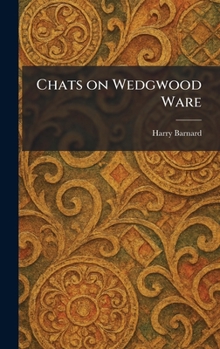
Chats on Wedgwood Ware

"Chats on Wedgwood Ware" is an authoritative and engaging exploration of the history, craftsmanship, and legacy of one of Britain's most iconic ceramic manufacturers. Written by Harry Barnard, who possessed an intimate knowledge of the Wedgwood factory and its traditions, this work provides a comprehensive overview of the artistic innovations that defined the brand. The text delves into the development of world-renowned styles, including Jasperware, Basalt, and Queen's Ware, tracing the evolution of these distinctive ceramics from their 18th-century origins through various periods of production.
The book serves as both a practical guide for collectors and a scholarly tribute to the genius of Josiah Wedgwood. Barnard offers detailed insights into the technical processes, design philosophies, and identifying marks that are essential for any enthusiast of English pottery. Beyond the technical aspects, the work captures the intersection of industrial progress and fine art, highlighting how Wedgwood transformed utilitarian objects into masterpieces of decorative design. Rich with historical context and expert analysis, "Chats on Wedgwood Ware" remains a vital resource for anyone interested in the enduring beauty and historical significance of fine English ceramics.
This work has been selected by scholars as being culturally important, and is part of the knowledge base of civilization as we know it. This work was reproduced from the original artifact, and remains as true to the original work as possible. Therefore, you may see the original copyright references, library stamps (as most of these works have been housed in our most important libraries around the world), and other notations in the work.
This work is in the public domain in the United States of America, and possibly other nations. Within the United States, you may freely copy and distribute this work, as no entity (individual or corporate) has a copyright on the body of the work.
As a reproduction of a historical artifact, this work may contain missing or blurred pages, poor pictures, errant marks, etc. Scholars believe, and we concur, that this work is important enough to be preserved, reproduced, and made generally available to the public. We appreciate your support of the preservation process, and thank you for being an important part of keeping this knowledge alive and relevant.
Customer Reviews
ThriftBooks ® and the ThriftBooks ® logo are registered trademarks of Thrift Books Global, LLC
