


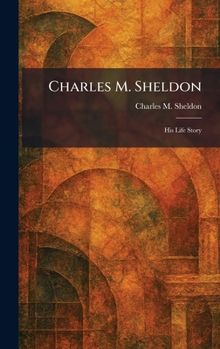
Charles M. Sheldon: His Life Story

"Charles M. Sheldon: His Life Story" provides a deep and personal look into the life of one of the most significant figures in the American Social Gospel movement. As the author of the international bestseller "In His Steps," Sheldon revolutionized modern Christian thought by posing the practical question, "What would Jesus do?" This autobiography documents his path from his youth to his influential ministry in Topeka, Kansas, where he sought to bridge the gap between faith and social action.
The narrative explores Sheldon's development as a writer, pastor, and social reformer, detailing the experiences that shaped his commitment to temperance, racial equality, and economic justice. By highlighting his efforts to apply biblical principles to the complexities of urban industrial life, the book illustrates the broader theological shifts occurring at the turn of the twentieth century. Charles M. Sheldon: His Life Story is an essential resource for understanding the origins of social activism within the church and the personal legacy of a man whose literary work transformed the lives of millions worldwide. It stands as a testament to the power of conviction and the historical impact of the Social Gospel era.
This work has been selected by scholars as being culturally important, and is part of the knowledge base of civilization as we know it. This work was reproduced from the original artifact, and remains as true to the original work as possible. Therefore, you may see the original copyright references, library stamps (as most of these works have been housed in our most important libraries around the world), and other notations in the work.
This work is in the public domain in the United States of America, and possibly other nations. Within the United States, you may freely copy and distribute this work, as no entity (individual or corporate) has a copyright on the body of the work.
As a reproduction of a historical artifact, this work may contain missing or blurred pages, poor pictures, errant marks, etc. Scholars believe, and we concur, that this work is important enough to be preserved, reproduced, and made generally available to the public. We appreciate your support of the preservation process, and thank you for being an important part of keeping this knowledge alive and relevant.
Customer Reviews
ThriftBooks ® and the ThriftBooks ® logo are registered trademarks of Thrift Books Global, LLC
