


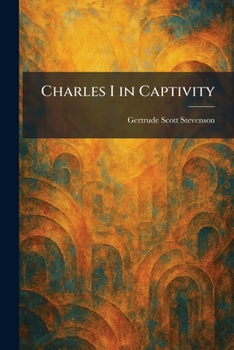
Charles I in Captivity

Select Format
Select Condition 
Book Overview
"Charles I in Captivity" provides a poignant and detailed chronicle of the final years of King Charles I of England, focusing on the period from his surrender to the Scots in 1646 to his eventual execution in 1649. Drawing upon contemporary accounts, letters, and memoirs, Gertrude Scott Stevenson reconstructs the daily life, political maneuvers, and personal dignity of the monarch during his imprisonment at Carisbrooke Castle and other locations.
The work offers a profound look at the collapse of the Stuart monarchy and the rise of the Cromwellian era. It captures the intense tension between the King and Parliament, providing deep insight into the constitutional and religious conflicts that tore the British Isles apart during the mid-seventeenth century. Readers will find a sympathetic yet historical portrayal of a king facing his downfall with remarkable composure and conviction.
This account is essential for those interested in the English Civil War, the history of the British royalty, and the dramatic events that led to the unique judicial execution of an English sovereign. Stevenson's narrative highlights the tragic human element within the broader political upheaval, making it a valuable resource for students of history and general readers alike.
This work has been selected by scholars as being culturally important, and is part of the knowledge base of civilization as we know it. This work was reproduced from the original artifact, and remains as true to the original work as possible. Therefore, you may see the original copyright references, library stamps (as most of these works have been housed in our most important libraries around the world), and other notations in the work.
This work is in the public domain in the United States of America, and possibly other nations. Within the United States, you may freely copy and distribute this work, as no entity (individual or corporate) has a copyright on the body of the work.
As a reproduction of a historical artifact, this work may contain missing or blurred pages, poor pictures, errant marks, etc. Scholars believe, and we concur, that this work is important enough to be preserved, reproduced, and made generally available to the public. We appreciate your support of the preservation process, and thank you for being an important part of keeping this knowledge alive and relevant.
Customer Reviews
ThriftBooks ® and the ThriftBooks ® logo are registered trademarks of Thrift Books Global, LLC
