
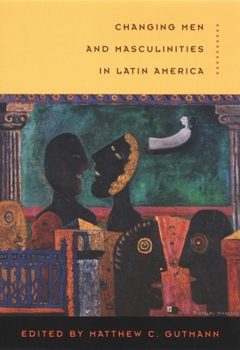
Ranging from fatherhood to machismo and from public health to housework, Changing Men and Masculinities in Latin America is a collection of pioneering studies of what it means to be a man in Latin America. Matthew C. Gutmann brings together essays by well-known U.S. Latin Americanists and newly translated essays by noted Latin American scholars. Historically grounded and attuned to global political and economic changes, this collection investigates what, if anything, is distinctive about and common to masculinity across Latin America at the same time that it considers the relative benefits and drawbacks of studies focusing on men there. Demonstrating that attention to masculinities does not thwart feminism, the contributors illuminate the changing relationships between men and women and among men of different ethnic groups, sexual orientations, and classes. The contributors look at Mexico, Argentina, Ecuador, Brazil, Colombia, Peru, Venezuela, Chile, and the United States. They bring to bear a number of disciplines--anthropology, history, literature, public health, and sociology--and a variety of methodologies including ethnography, literary criticism, and statistical analysis. Whether analyzing rape legislation in Argentina, the unique space for candid discussions of masculinity created in an Alcoholics Anonymous group in Mexico, the role of shame in shaping Chicana and Chicano identities and gender relations, or homosexuality in Brazil, Changing Men and Masculinities highlights the complex distinctions between normative conceptions of masculinity in Latin America and the actual experiences and thoughts of particular men and women. Contributors. Xavier Andrade, Daniel Balderston, Peter Beattie, Stanley Brandes, Héctor Carrillo, Miguel Díaz Barriga, Agustín Escobar, Francisco Ferrándiz, Claudia Fonseca, Norma Fuller, Matthew C. Gutmann, Donna Guy, Florencia Mallon, José Olavarría, Richard Parker, Mara Viveros
Probably nobody would doubt that the name Matthew C. Gutmann stands for high-quality research on gender issues with special emphasis on masculinities. In order to make clear what masculinity in Latin America is all about Gutmann chose in his edition a wide range of aspects (men and urban life, fatherhood, homosexuality etc.) These have been covered by different expers on gender issues and masculinities. One thesis which is expressed in different articles is that the changes in Latin American men have not only been brought about by the challenges from the feminist movement (which has been relatively weak in Latin America compared to Northern Europe and the US) but from the changes in the structures of Latin American societies as such. More women than ever before have joined the labour market and are now contributing to the family income, not to mention those who are the only breadwinners. Consequently, men have had to change and do domestic chores which just one generation ago would haven been unthinkable. This is clearly expressed in José Olavarria's essay on "Men at Home? Child Rearing and Housekeeping among Chilean Working-Class Fathers". It has led to a re-definition of masculinity in Latin America, and so far we can only see the beginning of a process of change which we have to watch carefully in the coming years. All in all: the book is highly recommended to readers interested in gender issues in Latin America as well as in Europe and the U.S.A.
ThriftBooks sells millions of used books at the lowest everyday prices. We personally assess every book's quality and offer rare, out-of-print treasures. We deliver the joy of reading in recyclable packaging with free standard shipping on US orders over $15. ThriftBooks.com. Read more. Spend less.

