


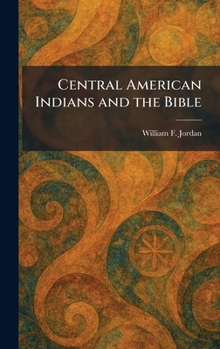
Central American Indians and the Bible

"Central American Indians and the Bible" is a compelling historical account of missionary efforts and the spread of Christian scripture among the indigenous populations of Central America during the early 20th century. Written by W. F. Jordan, a dedicated figure in the Bible distribution movement, the work provides an ethnographic and religious perspective on the challenges and successes of bringing the Gospel to diverse tribal groups across regions like Guatemala, El Salvador, and Panama.
The narrative details the cultural landscapes of various indigenous communities, offering insights into their social structures, languages, and spiritual lives. Jordan captures the complexities of cross-cultural communication and the impact of literacy and religious education on these societies. Through a series of anecdotal accounts and observations, the book highlights the dedication of missionaries and colporteurs who navigated difficult terrains to translate and distribute the scriptures in local dialects.
This work serves as a valuable resource for those interested in the history of Christian missions, Latin American studies, and the intersection of faith and indigenous culture. It preserves a specific moment in the history of religious outreach, illustrating the humanitarian and spiritual motivations behind the missionary movement in the Americas.
This work has been selected by scholars as being culturally important, and is part of the knowledge base of civilization as we know it. This work was reproduced from the original artifact, and remains as true to the original work as possible. Therefore, you may see the original copyright references, library stamps (as most of these works have been housed in our most important libraries around the world), and other notations in the work.
This work is in the public domain in the United States of America, and possibly other nations. Within the United States, you may freely copy and distribute this work, as no entity (individual or corporate) has a copyright on the body of the work.
As a reproduction of a historical artifact, this work may contain missing or blurred pages, poor pictures, errant marks, etc. Scholars believe, and we concur, that this work is important enough to be preserved, reproduced, and made generally available to the public. We appreciate your support of the preservation process, and thank you for being an important part of keeping this knowledge alive and relevant.
Customer Reviews
ThriftBooks ® and the ThriftBooks ® logo are registered trademarks of Thrift Books Global, LLC
