


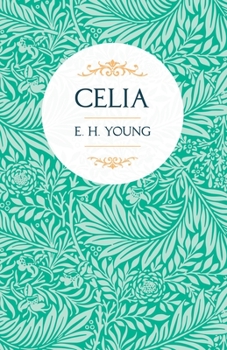
Celia

Select Format
Select Condition 
Book Overview
Behind a manner so vague that nobody troubles to look past it, a woman of forty-five keeps a private world she lets no one enter. Celia is a novel about what a marriage never says.
Celia lives in a flat in Upper Radstowe with Gerald, her architect husband, and their two children, keeping house, keeping the peace, and keeping her own counsel. When her niece Susan comes back from Paris having met Richard Milligan, the man Celia cared for before she married, the careful order of her days begins to shift. Around her are her brother John, her sisters May and Hester, and the other marriages of the family, which E. H. Young sets quietly side by side.
First published in 1937, Celia is one of seven novels Emily Hilda Young (1880-1949) set in Upper Radstowe, her lightly disguised version of Clifton in Bristol, where she lived for many years. She took the James Tait Black Memorial Prize for Miss Mole in 1930, saw William chosen as one of the first ten Penguin paperbacks in 1935, climbed rock seriously enough to help found the women's Pinnacle Club, and campaigned for the vote. Her real subject is the distance between what a household looks like from outside and what the people in it are actually thinking.
Customer Reviews
ThriftBooks ® and the ThriftBooks ® logo are registered trademarks of Thrift Books Global, LLC
