


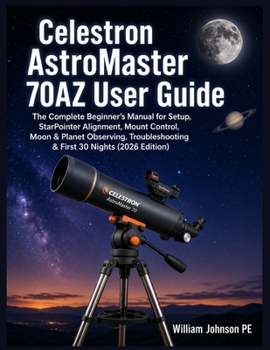
Celestron AstroMaster 70AZ User Guide: The Complete Beginner's Manual for Setup, StarPointer Alignment, Mount Control, Moon & Planet Observing, Troubl

You brought the AstroMaster 70AZ home expecting Saturn's rings in minutes - so why does the red dot never point where you're looking, and the image shakes every time you touch the focuser?
This is not a replacement for Celestron's manual - it's the practical companion that picks up exactly where that manual stops. Written by William Anderson PE in plain, jargon-free English, every chapter is built around the specific hardware in your hands: the StarPointer, the slow-motion controls, and the 20mm/10mm eyepieces you already own. Instead of general astronomy theory, it uses a proven problem-diagnosis-action-result method to turn confusion into a checklist, closing the exact gap thousands of AstroMaster 70AZ owners hit right after assembly.
Inside this guide, you'll discover: Every AstroMaster 70AZ component explained in plain EnglishThe daylight StarPointer alignment method that actually worksA complete first-night routine: find, focus, and hold the Moon steadyWhy the mount shakes - and the setup fixes that stop it20mm vs. 10mm: exactly when to switch eyepiecesHow to locate Jupiter and spot its four largest moonsFinding Saturn's rings and knowing what you're really seeingManual tracking techniques so targets stop drifting away"Why is everything blurry?" - and three other instant troubleshooting fixesRealistic expectations: what a 70mm refractor can and can't showUsing Stellarium and SkySafari to plan tonight's targetsWhich accessories are worth buying - and which to skipSmartphone astrophotography for the Moon, Jupiter, and SaturnSimple maintenance habits that protect your optics for yearsA structured First 30 Nights program from first light to full confidenceYes, Celestron already includes a manual - but it stops at "attach the tripod." This guide picks up right where that leaves off: real-world alignment, stability, target acquisition, and troubleshooting, with no optics theory to memorize and nothing written for a reader who already knows the jargon. Worried the telescope itself might be defective? Genuine hardware defects are rare - most "broken" telescopes are just misaligned or untracked, and this guide shows the difference in under five minutes. And rather than pushing upgrades, it says plainly which accessories are worth buying and which to skip, often saving readers more than the book itself costs.
If you want to stop guessing and start confidently finding Jupiter's moons and Saturn's rings, then scroll up and grab your copy today.
Customer Reviews
ThriftBooks ® and the ThriftBooks ® logo are registered trademarks of Thrift Books Global, LLC
