


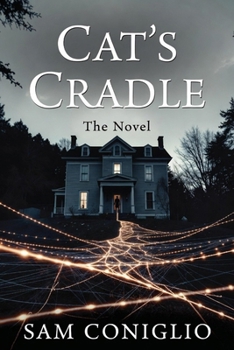
Cat's Cradle

Catherine Jones drives four hundred miles with her whole life packed into a car, fleeing the apartment where her husband choked to death in his chair while she stood in the doorway and did not move. Nine years of marriage taught her to read a man the way you read weather in a country with no forecast. It did not teach her how to live in the silence after.
The house on Blackwood Lane is supposed to be the end of something. Cheap, remote, far enough from the life Sterling built around her that she might finally disappear. But the dust on her worktable keeps returning in the same pattern every morning. The cold gathers at the cellar door. And in the small hours, a voice comes up from below in a register she knows too well - patient, tender, asking her to come down the stairs, the way she always came down the stairs.
Something has lived in that ground longer than anyone can measure, and it feeds on a single lie: that a broken thing is ruined past mending. It chose Cathy because she arrived already convinced of it.
It chose wrong. Cathy is a textile conservator. She has spent her life proving that torn is not the same as ruined - that a damaged thing, held in patient hands, can be made to hold again. What the house never understood, what Sterling never understood across all his careful years, is that the one woman who knows that in her hands is the worst prey it could have chosen.
Cat's Cradle is a novel about addiction, grief, and the long architecture of fear - and about the ordinary, impossible work of refusing, at last, to be afraid.
Customer Reviews
ThriftBooks ® and the ThriftBooks ® logo are registered trademarks of Thrift Books Global, LLC
