


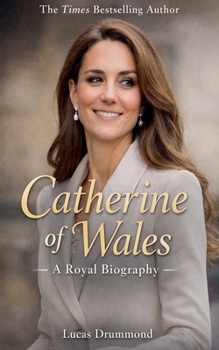
Catherine of Wales A Royal Biography

Catherine of Wales: A Royal Biography is a definitive, deeply researched portrait of the woman who will one day become Queen-told not through spectacle, scandal, or sensationalism, but through discipline, resilience, and quiet power.
This book traces Catherine's journey from her grounded upbringing in Berkshire to the heart of the British monarchy, revealing how an ordinary childhood forged an extraordinary capacity for endurance. Far from a fairy-tale ascent, her path unfolds as a long apprenticeship: shaped by scrutiny before protection, responsibility before title, and patience before certainty.
Beginning with her family life, education, and formative years, the biography explores how Catherine's character was built long before public attention found her. Her time at Marlborough College and the University of St Andrews emerges not as romantic prelude, but as critical preparation-where independence, emotional intelligence, and restraint were honed. Her relationship with Prince William is examined with nuance and realism, emphasizing the long years of uncertainty, separation, and deliberate choice that preceded commitment.
As Catherine enters public life, the book shifts into a powerful study of modern monarchy under pressure. It examines how she learned to withstand relentless media attention without reaction, how silence became strategy, and how dignity became her defining language. Rather than shaping narratives, Catherine allowed consistency to do the work-an approach that would later stabilize the institution itself.
Motherhood marks a profound turning point. Through the births of Prince George, Princess Charlotte, and Prince Louis, the biography reveals how Catherine integrated family life with constitutional duty, protecting childhood while carrying symbolic responsibility. Her experiences as a mother directly inform her most significant public contribution: the Early Years Initiative, a long-term, evidence-based focus on childhood development, mental health, and prevention. This work positions Catherine not as a ceremonial figure, but as a serious, research-driven advocate operating within the constraints of monarchy.
The later chapters confront transition and loss. The death of Queen Elizabeth II and the accession of King Charles III transform Catherine's role overnight. As Princess of Wales, she inherits one of the most emotionally charged titles in modern royal history-and chooses neither comparison nor reinvention. Instead, she brings steadiness to a moment of national recalibration, reinforcing continuity when it is most needed.
The biography also addresses health, vulnerability, and public honesty-offering a rare examination of how resilience is tested when composure alone is not enough. Catherine's response reframes strength itself, showing how boundaries, rest, and clarity can coexist with leadership.
Ultimately, Catherine of Wales is not a book about glamour or mythology. It is a study of preparation: how a woman learned to carry pressure without distortion, responsibility without entitlement, and power without display. It argues that Catherine's greatest achievement is not visibility, but sustainability-and that her future queenship will be defined not by spectacle, but by endurance.
Measured, authoritative, and deeply human, this biography offers readers a rare lens on modern royalty-and on the quiet architecture of leadership that lasts.
Customer Reviews
ThriftBooks ® and the ThriftBooks ® logo are registered trademarks of Thrift Books Global, LLC
