


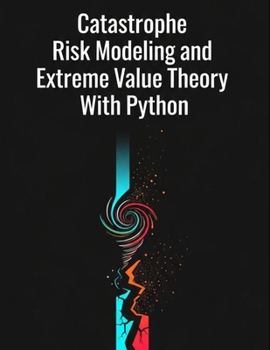
Catastrophe Risk Modeling and Extreme Value Theory With Python
No Customer Reviews

Level up your actuarial and analytics toolkit with the most complete, implementation-focused guide to catastrophe portfolios and tail risk. This intensive, 33-chapter blueprint takes you from rigorous theory to exam-style multiple-choice reinforcement and straight into production-ready Python code-chapter by chapter.
Who it's for
Actuaries, catastrophe modelers, and reinsurance analystsERM leaders and capital modelers building internal modelsData scientists and quantitative researchers entering insurance riskWhat you'll master
Extreme Value Theory end to end: domains of attraction, GEV/POT, tail index estimators, declustering, and nonstationary extremesSpatial/spatiotemporal extremes, conditional extremes, and tail dependence for multi-peril portfoliosFull catastrophe model pipeline: hazard → exposure → vulnerability → financial terms → portfolio roll-upYear-event tables, OEP/AEP/CDEP, PML and Tail-VaR, uncertainty bands, and secondary uncertaintyRare-event simulation (importance sampling, subset simulation) for extreme quantiles and exceedance probabilitiesReinsurance structuring and optimization; ILS, triggers, and basis risk analyticsClimate conditioning, trend-aware EVT, model validation, and governanceBuild real portfolios, not toy examples
Calibrate thresholds, tail indices, and return levels on sparse, messy dataConstruct EP curves with uncertainty overlays; attribute risk by region/peril/layerSimulate occurrence and aggregate treaties with reinstatements and hours clausesQuantify and manage basis risk for indemnity, parametric, and modeled-loss triggersStress-test nonstationarity and compound events (e.g., wind-surge-rain)Why this book
Dense, practitioner-grade coverage with a direct line to real decisionsDesigned for on-the-job impact: each topic closes with runnable Python workflowsBridges actuarial rigor and catastrophe engineering, so you can price, allocate capital, and communicate tail risk with confidenceUpgrade your models, tighten your capital, and outpace uncertainty. Start building industrial-grade catastrophe analytics today.
Format:Paperback
Language:English
ISBN:B0FQ3STWSV
ISBN13:9798264092480
Release Date:September 2025
Publisher:Independently Published
Length:352 Pages
Weight:1.80 lbs.
Dimensions:0.7" x 8.5" x 11.0"
Customer Reviews
0 rating
Copyright © 2026 Thriftbooks.com
Terms of Use | Privacy Policy | Do Not Sell/Share My Personal Information | Cookie Policy | Cookie Preferences | Accessibility Statement
ThriftBooks ® and the ThriftBooks ® logo are registered trademarks of Thrift Books Global, LLC
ThriftBooks ® and the ThriftBooks ® logo are registered trademarks of Thrift Books Global, LLC
