


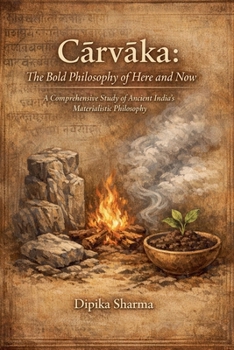
Cārvāka: The Bold Philosophy of Here and Now

Cārvāka: The Bold Philosophy of Here and Now is a comprehensive and critically balanced exploration of one of the most radical and misunderstood schools of ancient Indian thought. Often dismissed as crude materialism or mere hedonism, the Cārvāka (Lokāyata) tradition is here presented as a sophisticated philosophical system grounded in empiricism, rational inquiry, and fearless skepticism.
Unlike other Indian philosophical schools that emphasized metaphysics, spirituality, and liberation from the material world, Cārvāka philosophy boldly affirmed this life as the only reality and direct perception as the sole reliable source of knowledge. Rejecting supernatural explanations, scriptural authority, and the notion of an afterlife, Cārvāka thinkers constructed a worldview centered on nature, human experience, and the pursuit of happiness in the here and now.
This book carefully reconstructs Cārvāka philosophy from fragmentary sources preserved in classical Sanskrit, Buddhist, and Jain texts, addressing the methodological challenges of studying a tradition whose original works were largely lost or suppressed. It explores the historical origins of Cārvāka thought, its epistemology, materialistic theory of consciousness, ethical framework, social and political views, and its intense philosophical debates with Vedānta, Buddhism, Sāṁkhya, and Nyāya-Vaiśeṣika schools.
Written in a clear and accessible style, the book bridges ancient philosophy with modern concerns, drawing meaningful parallels between Cārvāka ideas and contemporary discussions in neuroscience, scientific materialism, secular ethics, and philosophy of mind. It neither promotes nor condemns the Cārvāka worldview, but instead treats it with scholarly seriousness, intellectual respect, and critical balance.
Intended for students, researchers, and general readers interested in Indian philosophy, materialism, and the history of ideas, this work restores Cārvāka to its rightful place as a major philosophical tradition-one that challenges assumptions, provokes debate, and continues to resonate in an age shaped by science, reason, and empirical inquiry.
Customer Reviews
ThriftBooks® and the ThriftBooks® logo are registered trademarks of Thrift Books Global, LLC
