


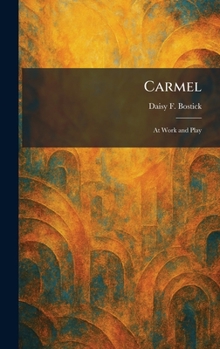
Carmel: At Work and Play

"Carmel--at Work and Play" offers a fascinating glimpse into the early life of Carmel-by-the-Sea, California, during its formative years as a world-renowned artist colony. Written by Daisy F. Bostick, a dedicated observer of the Monterey Peninsula, this work captures the unique spirit of a community that balanced creative labor with a deep appreciation for the natural beauty of the Pacific coast.
The narrative details the social fabric, local legends, and the daily rhythms of the residents who transformed a remote seaside settlement into a cultural hub. Readers will find insightful accounts of the painters, writers, and dreamers who shaped the town's identity, as well as the architectural and environmental features that define the region. More than just a local chronicle, the book serves as a vital record of the Bohemian lifestyle and the intentional preservation of a simplified, art-focused existence during the 1920s.
Highlighting the interplay between the rugged landscape and the human imagination, this work remains an essential resource for those interested in California history, coastal development, and the enduring legacy of American artistic communities.
This work has been selected by scholars as being culturally important, and is part of the knowledge base of civilization as we know it. This work was reproduced from the original artifact, and remains as true to the original work as possible. Therefore, you may see the original copyright references, library stamps (as most of these works have been housed in our most important libraries around the world), and other notations in the work.
This work is in the public domain in the United States of America, and possibly other nations. Within the United States, you may freely copy and distribute this work, as no entity (individual or corporate) has a copyright on the body of the work.
As a reproduction of a historical artifact, this work may contain missing or blurred pages, poor pictures, errant marks, etc. Scholars believe, and we concur, that this work is important enough to be preserved, reproduced, and made generally available to the public. We appreciate your support of the preservation process, and thank you for being an important part of keeping this knowledge alive and relevant.
Customer Reviews
ThriftBooks ® and the ThriftBooks ® logo are registered trademarks of Thrift Books Global, LLC
