


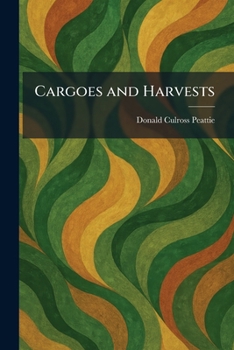
Cargoes and Harvests

Select Format
Select Condition 
Book Overview
"Cargoes and Harvests" is a fascinating exploration of the botanical wonders that have shaped human civilization and the global economy. Written by the renowned naturalist Donald Culross Peattie, this work delves into the dramatic histories of the world's most influential plants. From the legendary spice routes of the East to the vast rubber plantations of the Amazon, Peattie traces how the quest for "cargoes" such as tea, coffee, tobacco, and quinine fueled exploration, ignited international conflicts, and built global empires.
Combining scientific insight with a lyrical narrative style, the author examines the vital link between nature's "harvests" and the progress of human society. Each chapter focuses on a specific crop, detailing its biological origins and its profound impact on the socio-economic landscape of the modern world. Peattie highlights the labor, ingenuity, and often the greed involved in transforming wild flora into essential global commodities.
This compelling study serves as both an introduction to economic botany and a sweeping historical account of how the natural world dictates the course of human destiny. "Cargoes and Harvests" remains a seminal text for readers interested in the intersection of natural history, geography, and the intricate threads of international trade.
This work has been selected by scholars as being culturally important, and is part of the knowledge base of civilization as we know it. This work was reproduced from the original artifact, and remains as true to the original work as possible. Therefore, you may see the original copyright references, library stamps (as most of these works have been housed in our most important libraries around the world), and other notations in the work.
This work is in the public domain in the United States of America, and possibly other nations. Within the United States, you may freely copy and distribute this work, as no entity (individual or corporate) has a copyright on the body of the work.
As a reproduction of a historical artifact, this work may contain missing or blurred pages, poor pictures, errant marks, etc. Scholars believe, and we concur, that this work is important enough to be preserved, reproduced, and made generally available to the public. We appreciate your support of the preservation process, and thank you for being an important part of keeping this knowledge alive and relevant.
Customer Reviews
ThriftBooks® and the ThriftBooks® logo are registered trademarks of Thrift Books Global, LLC
