


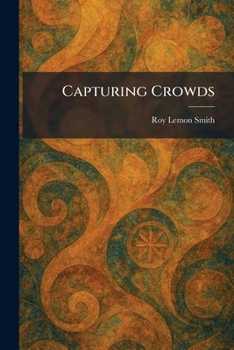
Capturing Crowds

"Capturing Crowds" is a comprehensive guide to effective ministry and church growth, focusing on the strategies and techniques required to build and sustain a vibrant religious community. Written by the influential minister Roy Lemon Smith, this work explores the practicalities of modern evangelism, offering insights into the psychology of public interest and the art of engaging a diverse congregation. Smith addresses the essential skills of the successful pastor, from the delivery of compelling sermons to the organizational leadership necessary to foster community involvement.
The book delves into the challenges of attracting an audience in an increasingly distracted world, providing timeless advice on how to make the spiritual message relevant and accessible. By examining the intersection of social dynamics and pastoral outreach, Smith emphasizes the importance of enthusiasm, innovation, and genuine connection in the work of the church. "Capturing Crowds" serves as a significant historical resource for understanding the evolution of American religious life and the professionalization of ministerial practices during the early twentieth century. It remains an insightful study for those interested in the history of homiletics and the strategic development of religious institutions.
This work has been selected by scholars as being culturally important, and is part of the knowledge base of civilization as we know it. This work was reproduced from the original artifact, and remains as true to the original work as possible. Therefore, you may see the original copyright references, library stamps (as most of these works have been housed in our most important libraries around the world), and other notations in the work.
This work is in the public domain in the United States of America, and possibly other nations. Within the United States, you may freely copy and distribute this work, as no entity (individual or corporate) has a copyright on the body of the work.
As a reproduction of a historical artifact, this work may contain missing or blurred pages, poor pictures, errant marks, etc. Scholars believe, and we concur, that this work is important enough to be preserved, reproduced, and made generally available to the public. We appreciate your support of the preservation process, and thank you for being an important part of keeping this knowledge alive and relevant.
Customer Reviews
ThriftBooks ® and the ThriftBooks ® logo are registered trademarks of Thrift Books Global, LLC
