


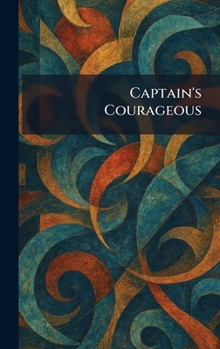
Captain's Courageous

"Captains Courageous" is a classic maritime adventure that explores the transformation of a spoiled youth into a disciplined and resilient young man. When Harvey Cheyne, the pampered son of a wealthy American railroad tycoon, is washed overboard from a luxury liner in the North Atlantic, he is rescued by the crew of the "We're Here", a Gloucester fishing schooner. Far from the life of privilege he has always known, Harvey is forced to earn his keep and learn the grueling trade of deep-sea fishing under the command of the stern but fair Disko Troop.
As the schooner navigates the treacherous Grand Banks, Harvey undergoes a profound change, trading his arrogance for the values of hard labor, humility, and camaraderie. Rudyard Kipling's masterful storytelling captures the atmospheric detail of the 19th-century fishing industry and the rugged beauty of the ocean. This work remains a timeless study of character development and a celebrated tribute to the men who braved the sea. It is a quintessential coming-of-age tale that illustrates how the challenges of the natural world can forge strength and maturity in the human spirit.
This work has been selected by scholars as being culturally important, and is part of the knowledge base of civilization as we know it. This work was reproduced from the original artifact, and remains as true to the original work as possible. Therefore, you may see the original copyright references, library stamps (as most of these works have been housed in our most important libraries around the world), and other notations in the work.
This work is in the public domain in the United States of America, and possibly other nations. Within the United States, you may freely copy and distribute this work, as no entity (individual or corporate) has a copyright on the body of the work.
As a reproduction of a historical artifact, this work may contain missing or blurred pages, poor pictures, errant marks, etc. Scholars believe, and we concur, that this work is important enough to be preserved, reproduced, and made generally available to the public. We appreciate your support of the preservation process, and thank you for being an important part of keeping this knowledge alive and relevant.
Customer Reviews
ThriftBooks ® and the ThriftBooks ® logo are registered trademarks of Thrift Books Global, LLC
