


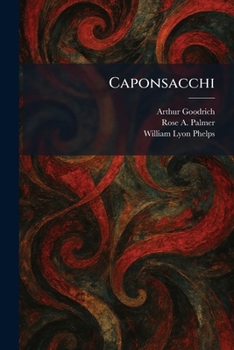
Caponsacchi

"Caponsacchi" is a compelling dramatic adaptation of Robert Browning's monumental narrative poem, "The Ring and the Book". Developed by Arthur Goodrich and Rose A. Palmer, this play transforms the intricate layers of Browning's Victorian masterpiece into a vivid theatrical experience. Set against the backdrop of late seventeenth-century Italy, the story explores the tragic intersection of law, religion, and human passion.
The drama revolves around the noble and courageous priest, Giuseppe Caponsacchi, who risks his reputation and his life to rescue the innocent Pompilia from the cruelty of her husband, Count Guido Franceschini. As the plot unfolds through a series of courtroom testimonies and flashbacks, the play examines themes of justice, sacrifice, and the search for truth. This work captured the imagination of early twentieth-century audiences, bringing renewed attention to the historical murder case that originally inspired Browning. Featuring a foreword by the esteemed scholar William Lyon Phelps, "Caponsacchi" stands as a significant literary bridge between narrative poetry and the modern stage, offering a profound character study of a man caught between his ecclesiastical vows and his moral conscience.
This work has been selected by scholars as being culturally important, and is part of the knowledge base of civilization as we know it. This work was reproduced from the original artifact, and remains as true to the original work as possible. Therefore, you may see the original copyright references, library stamps (as most of these works have been housed in our most important libraries around the world), and other notations in the work.
This work is in the public domain in the United States of America, and possibly other nations. Within the United States, you may freely copy and distribute this work, as no entity (individual or corporate) has a copyright on the body of the work.
As a reproduction of a historical artifact, this work may contain missing or blurred pages, poor pictures, errant marks, etc. Scholars believe, and we concur, that this work is important enough to be preserved, reproduced, and made generally available to the public. We appreciate your support of the preservation process, and thank you for being an important part of keeping this knowledge alive and relevant.
Customer Reviews
ThriftBooks ® and the ThriftBooks ® logo are registered trademarks of Thrift Books Global, LLC
