


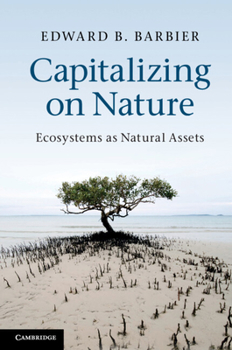
Capitalizing on Nature
No Customer Reviews

Select Format
Select Condition 
Book Overview
The basic unit of nature - the ecosystem - is a special form of wealth, which we can think of as a stock of natural capital. However, perhaps because this capital is free, we have tended to view it as limitless, abundant and always available for our use, exploitation and conversion. Capitalizing on Nature shows how modeling ecosystems as natural capital can help us to analyze the economic behavior that has led to the overuse of so much ecological wealth. It explains how this concept of ecosystem as natural capital sheds light on a number of important issues, including landscape conversion, ecological restoration, ecosystem resilience and collapse, spatial benefits and payments for ecosystem services. The book concludes by focusing on major policy challenges that need to be overcome in order to avert the worsening problem of ecological scarcity and how we can fund novel financing mechanisms for global conservation.
Format:Paperback
Language:English
ISBN:0521707552
ISBN13:9780521189279
Release Date:October 2011
Publisher:Cambridge University Press
Length:336 Pages
Weight:1.20 lbs.
Dimensions:0.6" x 6.4" x 9.5"
Customer Reviews
0 rating
Copyright © 2026 Thriftbooks.com Terms of Use
| Privacy Policy | Do Not
Sell/Share My Personal Information | Cookie Policy | Cookie Preferences | Accessibility Statement
ThriftBooks® and the ThriftBooks® logo are registered trademarks of Thrift Books Global, LLC
ThriftBooks® and the ThriftBooks® logo are registered trademarks of Thrift Books Global, LLC
