


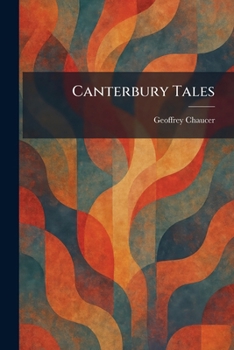
Canterbury Tales

"Canterbury Tales" is a foundational masterpiece of English literature and a vivid tapestry of medieval life. Written by Geoffrey Chaucer in the late 14th century, this expansive work is structured as a storytelling contest among a group of pilgrims traveling from London to the shrine of Saint Thomas Becket at Canterbury Cathedral. The diverse group of travelers-representing a broad cross-section of 14th-century society-includes a knight, a prioress, a miller, and the irrepressible Wife of Bath, among many others.
The collection is renowned for its rich characterization and its use of various literary genres, ranging from courtly romances and moral allegories to bawdy fabliaux. Through these tales, Chaucer explores universal themes of love, betrayal, religious devotion, and social class with sharp wit and profound human insight. As one of the earliest major works written in the Middle English vernacular, "Canterbury Tales" helped establish English as a legitimate language for high art. It remains a essential pillar of the Western canon, celebrated for its linguistic innovation, humor, and enduring observations on human nature.
This work has been selected by scholars as being culturally important, and is part of the knowledge base of civilization as we know it. This work was reproduced from the original artifact, and remains as true to the original work as possible. Therefore, you may see the original copyright references, library stamps (as most of these works have been housed in our most important libraries around the world), and other notations in the work.
This work is in the public domain in the United States of America, and possibly other nations. Within the United States, you may freely copy and distribute this work, as no entity (individual or corporate) has a copyright on the body of the work.
As a reproduction of a historical artifact, this work may contain missing or blurred pages, poor pictures, errant marks, etc. Scholars believe, and we concur, that this work is important enough to be preserved, reproduced, and made generally available to the public. We appreciate your support of the preservation process, and thank you for being an important part of keeping this knowledge alive and relevant.
Related Subjects
PoetryCustomer Reviews
ThriftBooks ® and the ThriftBooks ® logo are registered trademarks of Thrift Books Global, LLC
