


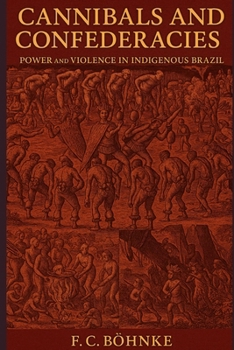
Cannibals and Confederacies: Power and Violence in Indigenous Brazil

In "Cannibals and Confederacies," historian F.C. B hnke challenges longstanding European myths about Brazil's indigenous Tupinamb people, presenting them not as either noble savages or mindless barbarians, but as sophisticated political actors navigating a complex world.
Drawing on 16th-century accounts from Portuguese, French, and German sources, B hnke reconstructs the political organization of Tupinamb society before its destruction through European colonization. The book examines how warfare, alliance-building, and even ritual cannibalism functioned within a coherent political system that Europeans often failed to comprehend.
Through meticulous research, B hnke demonstrates how the Tupinamb maintained autonomous villages while forming confederacies capable of mobilizing thousands of warriors. Their leadership was based not on hereditary privilege but on demonstrated valor, oratorical skill, and generosity. Their practice of ritual cannibalism, rather than representing mindless savagery, operated within a sophisticated framework of political relationships and cosmological beliefs.
The book also explores Tupinamb responses to European arrival, showing how they strategically formed alliances with different European powers to pursue their own political objectives. Far from being passive victims, they actively shaped the early colonial encounter through calculated decisions about alliance, resistance, and selective adaptation.
By moving beyond both demonization and romanticization of indigenous practices, "Cannibals and Confederacies" offers a nuanced understanding of a sophisticated political system operating on its own terms. This groundbreaking work not only illuminates Brazil's indigenous past but also challenges readers to reconsider assumptions about political organization, violence, and cultural difference that continue to shape our world today.
Related Subjects
HistoryCustomer Reviews
ThriftBooks® and the ThriftBooks® logo are registered trademarks of Thrift Books Global, LLC
