


Candida albicans: Shift from Commensalism to Invasiveness
No Customer Reviews

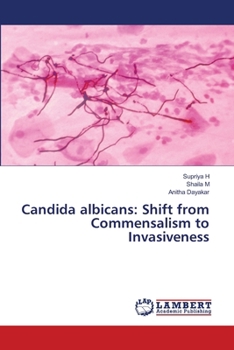
The predominant fungi isolated from human mouth belong to the genus Candida, and while there are more than 150 Candida species, approximately only 10 of these colonize the oral cavity. Candida albicans (C. albicans) is the most prevalent species recognized (70 to 75% of isolates), followed by C. glabrata and C. tropicalis (7% of isolates). Array of factors including host, systemic and iatrogenic has been associated with an increase in the incidence of opportunistic infections involving Candida and thus regarded as pathogenic species. The transition of this innocuous commensal into disease-causing 'parasite' may be associated with the virulence attributes of the microorganism and an array of host factors. Factors contributing to the pathogenicity include surface molecules which mediate adhesion to and invasion into host cells, secretion of hydrolases, yeast-to-hypha transition, contact sensing and thigmotropism, biofilm formation, phenotypic switching and a range of fitness attributes. Here we overview the various modalities as how this normal commensal turns pathogenic, it's possible interactions with host epithelial cells and role in malignant transformation of oral mucosa.
Format:Paperback
Language:English
ISBN:6209543367
ISBN13:9786209543364
Release Date:January 2026
Publisher:LAP Lambert Academic Publishing
Length:52 Pages
Weight:0.18 lbs.
Dimensions:0.1" x 6.0" x 9.0"
Customer Reviews
0 rating
Copyright © 2026 Thriftbooks.com
Terms of Use | Privacy Policy | Do Not Sell/Share My Personal Information | Cookie Notice | Cookie Preferences | Accessibility Statement
ThriftBooks ® and the ThriftBooks ® logo are registered trademarks of Thrift Books Global, LLC
ThriftBooks ® and the ThriftBooks ® logo are registered trademarks of Thrift Books Global, LLC
