


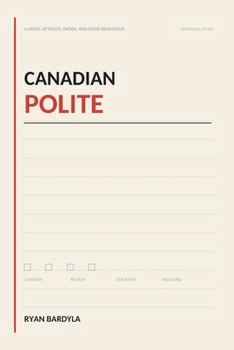
Canadian Polite: A Novel of Peace, Order, and Good Behaviour

Nobody sentences Owen Mercer to a lifetime of suspicion. Nobody has to.
At seventeen, Owen punches the boy who created and circulated a synthetic sexual image of his younger brother. He admits it. He accepts the consequences. He completes the intervention designed to make sure it never happens again.
Then the incident follows him.
A school report becomes an assessment. The assessment becomes a summary. The summary becomes a risk signal read by employers, insurers, safety systems, and people who have never met him. Each copy makes the original judgment look more certain.
Owen's father, Daniel, is an industrial electrician who trusts systems that can be tested. When he finally sees his son's 684-page file, he notices something the bureaucracy does not: the same handful of facts have been copied so many times they have begun to look like independent witnesses.
But the system is not simply evil. It prevents real harm. It saves lives. Daniel's problem is harder than deciding whether surveillance is good or bad:
What evidence would make a judgment less confident?
Canadian Polite is a near-future novel about fathers and sons, public safety, artificial intelligence, institutional memory, accountability, and the right to become more than the worst thing in your file.
Customer Reviews
ThriftBooks ® and the ThriftBooks ® logo are registered trademarks of Thrift Books Global, LLC
