


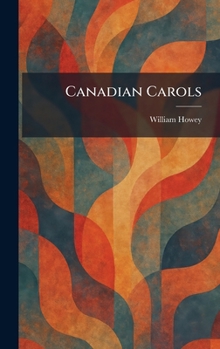
Canadian Carols

"Canadian Carols" is an evocative collection of poetry that captures the natural beauty and burgeoning cultural spirit of Canada during the early twentieth century. Composed by William Howey, these verses explore the vastness of the northern landscape, the rhythms of rural life, and the profound connection between the people and their environment. The work stands as a testament to the development of a distinct Canadian literary voice, blending traditional poetic forms with themes uniquely rooted in the North American experience.
Throughout the volume, Howey employs vivid imagery to describe the changing seasons, from the crystalline stillness of a Canadian winter to the vibrant awakening of the prairie spring. These poems do more than just depict scenery; they reflect the social and emotional landscape of a nation forging its identity. Readers interested in historical Canadian literature and classic verse will find in "Canadian Carols" a rhythmic and heartfelt celebration of heritage, nature, and the human spirit. This collection remains an important piece of Canada's poetic legacy, offering a window into the sentiments and pastoral ideals of a bygone era.
This work has been selected by scholars as being culturally important, and is part of the knowledge base of civilization as we know it. This work was reproduced from the original artifact, and remains as true to the original work as possible. Therefore, you may see the original copyright references, library stamps (as most of these works have been housed in our most important libraries around the world), and other notations in the work.
This work is in the public domain in the United States of America, and possibly other nations. Within the United States, you may freely copy and distribute this work, as no entity (individual or corporate) has a copyright on the body of the work.
As a reproduction of a historical artifact, this work may contain missing or blurred pages, poor pictures, errant marks, etc. Scholars believe, and we concur, that this work is important enough to be preserved, reproduced, and made generally available to the public. We appreciate your support of the preservation process, and thank you for being an important part of keeping this knowledge alive and relevant.
Customer Reviews
ThriftBooks ® and the ThriftBooks ® logo are registered trademarks of Thrift Books Global, LLC
